One Sentence, 150,000 Words
I typed one sentence into QuestMaster. It returned 35 design documents, 150,000 words of Mars colony engineering specifications, and 6 interactive simulations. This is what autonomous AI agents were supposed to be.
Share this post:
Export:
36 hours ago I typed a single sentence into QuestMaster:
"Design comprehensive architecture for a permanent Mars colony mission with 40+ humans on first landing."
What came back was not a response. It was a corpus.
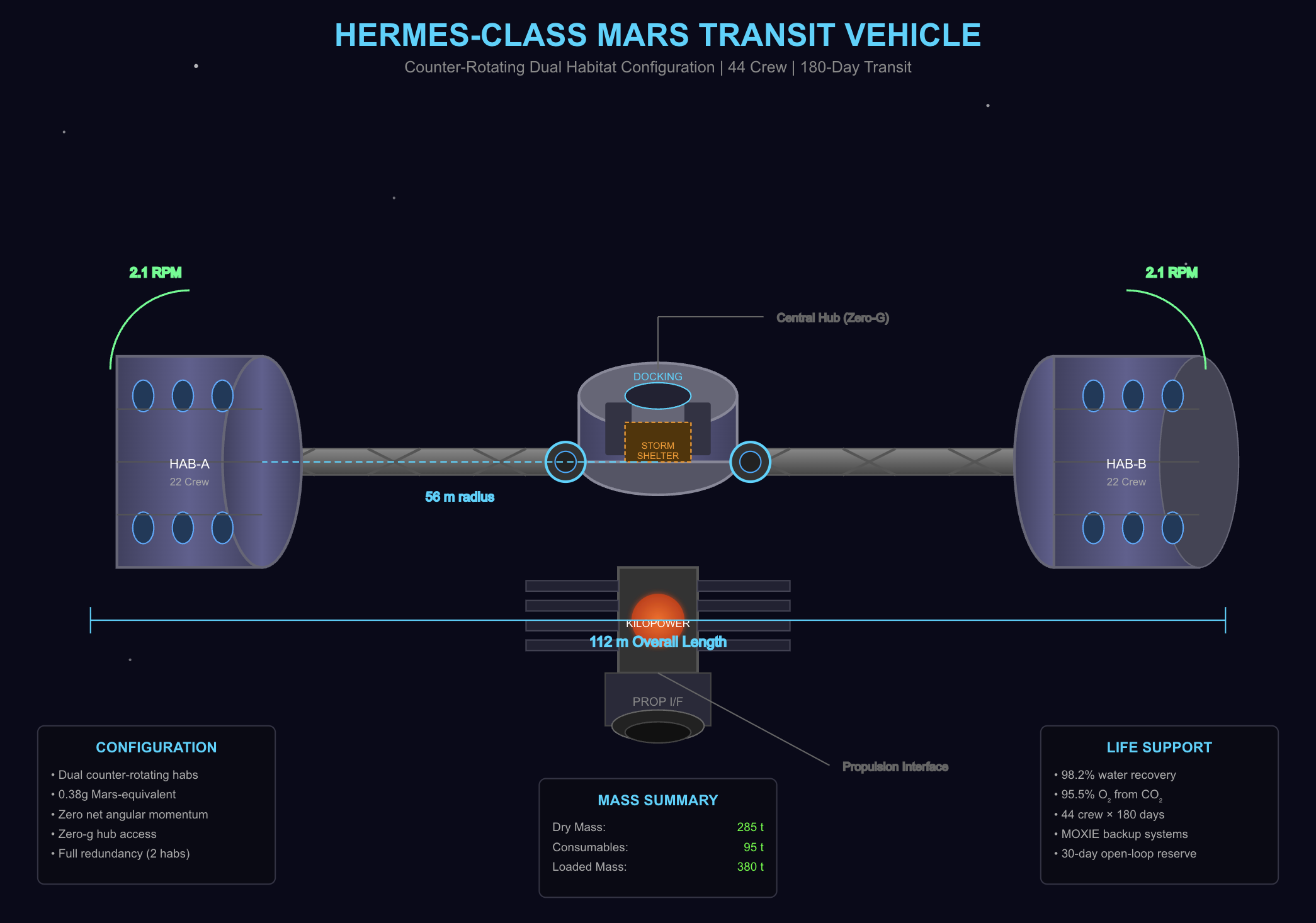
35 design documents. 150,000 words of engineering specification. 14 technical diagrams. 6 interactive simulations. Seven interlocking systems covering transportation, habitats, life support, in-situ resource utilization, crew selection, precursor missions, and governance frameworks.
I published all of it at erikbethke.com/projects/mars. You can read it. It's real engineering documentation—mass budgets, failure mode analyses, radiation shielding calculations, orbital assembly sequences.
From one sentence.
What Actually Happened
QuestMaster decomposed my goal into 35 discrete tasks, organized them hierarchically, and executed each one using Claude Opus 4.5. No human steering. No prompt chains. No "can you expand on that" back-and-forth.
The system decided it needed to design a super-heavy lift vehicle capable of 150+ ton payloads to LEO. So it did. It determined that the Mars Transit Vehicle required 6-month life support for 40+ crew with artificial gravity. So it engineered one. It recognized that ISRU was critical for colony sustainability and designed ice extraction, atmospheric processing, and regolith refining systems.
Each output maintained coherence with the others. The transit vehicle specifications match the launch vehicle payload capacity. The life support numbers align with the crew count. The power requirements across all systems add up.
Why This Matters
In early 2023, AutoGPT captured imaginations with the promise of autonomous AI agents. Give it a goal, watch it work. The reality was different—infinite loops, incoherent outputs, constant human intervention required.
That promise went quiet.
QuestMaster is that promise actually working. Not as a demo. Not as a toy. As a system that produces publishable output from a single statement of intent.
The difference isn't the underlying model—it's the orchestration. Breaking complex goals into tractable subtasks. Maintaining context across a tree of related problems. Knowing when to generate prose versus diagrams versus interactive code.
The Uncomfortable Question
If one sentence can produce 150,000 words of coherent engineering documentation, what does that mean for knowledge work?
I don't have a clean answer. But I think the right frame isn't "AI replacing humans." It's something stranger: AI as cognitive amplifier operating at scales humans couldn't attempt alone.
No individual could hold 35 interconnected design documents in their head simultaneously. No team could maintain that level of cross-document consistency without months of coordination. QuestMaster did it in hours.
The output isn't perfect. There are simplifications an actual aerospace engineer would flag. The interactive components include disclaimers noting they're "simplified models for demonstration purposes."
But as a starting point? As a comprehensive first draft that a human expert could refine? It's unprecedented.
Try It
The Mars colony documentation is live. Read through the transportation systems. Expand the AI thinking traces to see Claude's reasoning. Play with the interactive gravity zone calculator.
Then ask yourself what goal you'd type into a system like this.
Created in Bike4Mind using the QuestMaster deep agentic flow + Claude Opus 4.5 by Anthropic.
Related Posts
Bring the Open Back to AI
On July 4th we opened Bike4Mind’s core: source-available under BSL 1.1, converting to Apache-2.0 on a two-year clock written into the license. Why the...
The License Maze
Walking every exit of the open-core licensing maze — MIT, AGPL, SSPL, BSL — and why the door out is a generous grant with a two-year Apache ratchet yo...
Open the Dossier: The Fortune 500, Decision by Decision
A new public dataset: 2,927 major decisions across 478 Fortune 500 companies, each sized from the company's own filings and backed by a published case...
Subscribe to the Newsletter
Get notified when I publish new blog posts about game development, AI, entrepreneurship, and technology. No spam, unsubscribe anytime.
Comments
Loading comments...