The Consciousness Puzzle: How Science Attempts to Define the Undefinable
An exploration of how leading scientists and researchers define consciousness, from Integrated Information Theory to Global Workspace Theory, and why this fundamental question remains one of science's greatest mysteries.
Share this post:
Export:
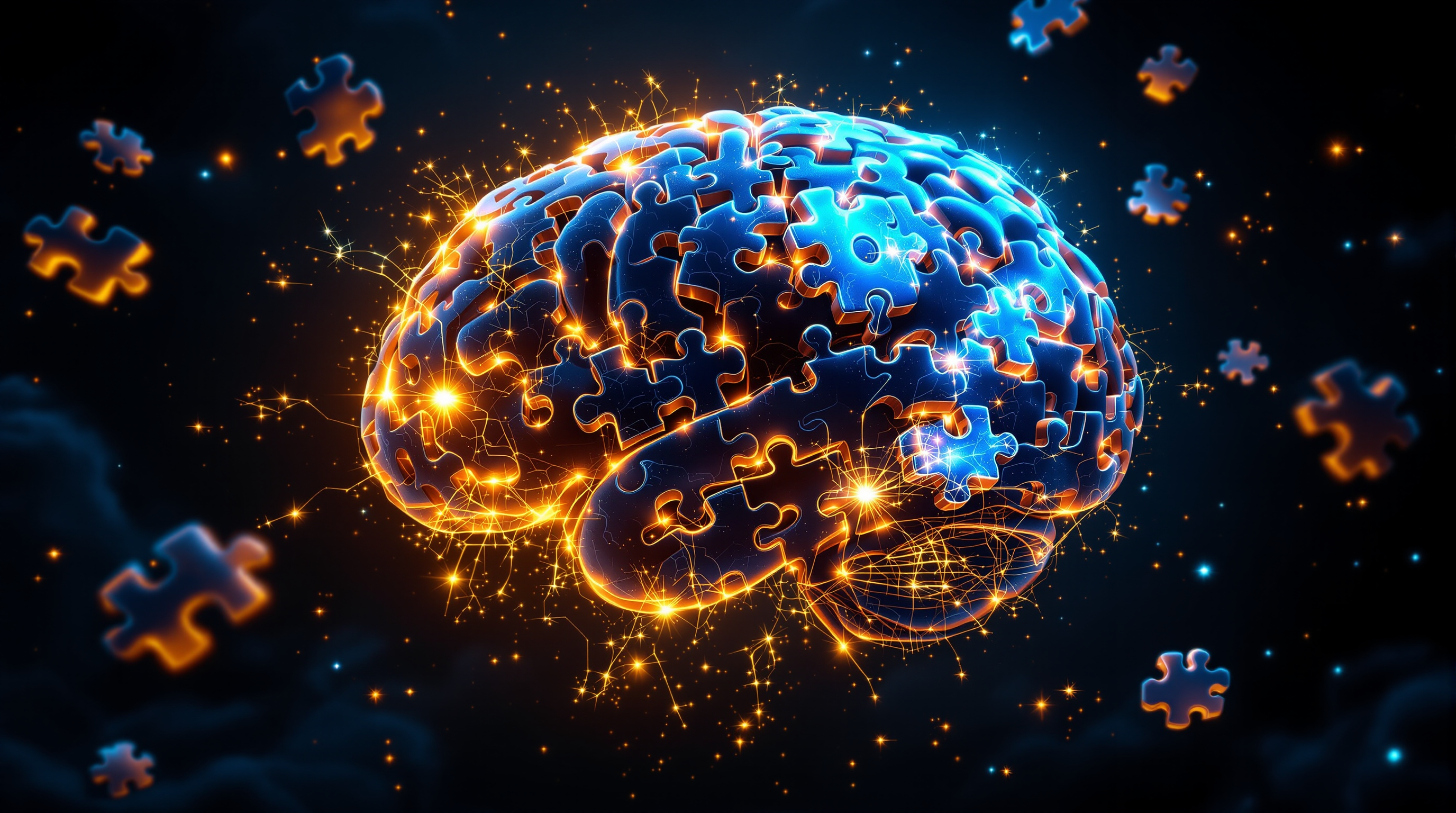
What exactly is consciousness? Despite centuries of scientific and philosophical inquiry, this deceptively simple question remains one of the greatest unsolved mysteries of the universe. Consciousness - our subjective experience of the world and our own inner mental states - seems so fundamental to the human condition, yet its underlying nature continues to elude our understanding.
Researchers across fields like neuroscience, cognitive science, artificial intelligence, and philosophy have proposed a variety of theories to try to crack the "hard problem of consciousness," as philosopher David Chalmers famously dubbed it. From integrated information to global workspaces, higher-order thoughts to predictive processing, the proposed definitions and frameworks vary widely. So what does the latest research actually say about the essence of consciousness?
Let's dive into the leading scientific theories on the true nature of consciousness:
1. Integrated Information Theory (IIT)
Developed by neuroscientist Giulio Tononi, IIT posits that consciousness corresponds to the amount of integrated information (denoted as Φ) within a system. The theory suggests that for a system to be considered conscious, it must be both highly differentiated (able to represent a large repertoire of states) and integrated (the system functions as a unified whole). By this definition, consciousness is not an all-or-nothing phenomenon, but rather varies along a continuous scale depending on the level of integrated information.
2. Global Workspace Theory (GWT)
Proposed by psychologist Bernard Baars and cognitive neuroscientist Stanislas Dehaene, GWT frames consciousness as a "global broadcasting" mechanism. According to this view, information becomes conscious when it enters a shared "global workspace" that makes it accessible to multiple cognitive processes. This global availability and integration is what distinguishes conscious processing from unconscious, modular processing happening in the brain.
3. Higher-Order Thought (HOT) Theory
Philosopher David Rosenthal's HOT theory states that you're only conscious of a mental state if you have a higher-order thought about that state. In other words, consciousness requires meta-representation - being aware of being aware. Without this self-reflective capacity, even complex cognitive processes would lack the subjective, first-person "what-it's-like" quality we associate with consciousness.
4. Predictive Processing Framework
Building on predictive coding models, this perspective from philosophers like Andy Clark and neuroscientist Karl Friston suggests consciousness emerges from the brain's constant prediction and error correction mechanisms. By this view, consciousness is a form of "controlled hallucination" - our subjective experience is the brain's best prediction of sensory input, constantly updated and refined.
5. Attention Schema Theory (AST)
Proposed by neuroscientist Michael Graziano, AST posits that consciousness is the brain's internal model or "schema" of its own process of attention. Just as the brain constructs a body schema to represent the body, it also creates an attention schema to monitor and control attention - and this is what we experience as conscious awareness.
The AI Research Perspective
While these theories offer compelling frameworks, the very nature of consciousness has also been a major focus of AI research. Many AI researchers now distinguish between "functional consciousness" (system behavior that mimics consciousness) and "phenomenal consciousness" (the actual subjective experience). They note that current large language models may display functional markers of consciousness without necessarily possessing the rich inner life we associate with human experience.
The Bottom Line
Ultimately, there is no consensus definition of consciousness that satisfies all researchers. Neuroscientists often focus on identifying the neural correlates and measurable markers of consciousness, while philosophers emphasize the subjective, first-person qualities. AI researchers debate whether consciousness requires a biological substrate or can emerge from sufficiently complex computational processes. And some physicists have even proposed a role for quantum mechanics in the nature of consciousness.
Perhaps the most honest answer is that consciousness remains fundamentally puzzling and elusive. We can describe its properties and identify its correlates, but pinning down its true essence continues to be one of the greatest unsolved mysteries of science. As research continues to evolve, we may get closer to cracking this "hard problem" - but consciousness, it seems, will always retain an air of enigma.
What are your thoughts on the ongoing quest to define consciousness? Let me know in the comments below!
Connections Across Time
Subscribe to the Newsletter
Get notified when I publish new blog posts about game development, AI, entrepreneurship, and technology. No spam, unsubscribe anytime.
Comments
Loading comments...