The Human Router Hypothesis
A Theory of Intelligence, Expertise, and Why the Future of AI Isn't Bigger Models
Share this post:
Export:
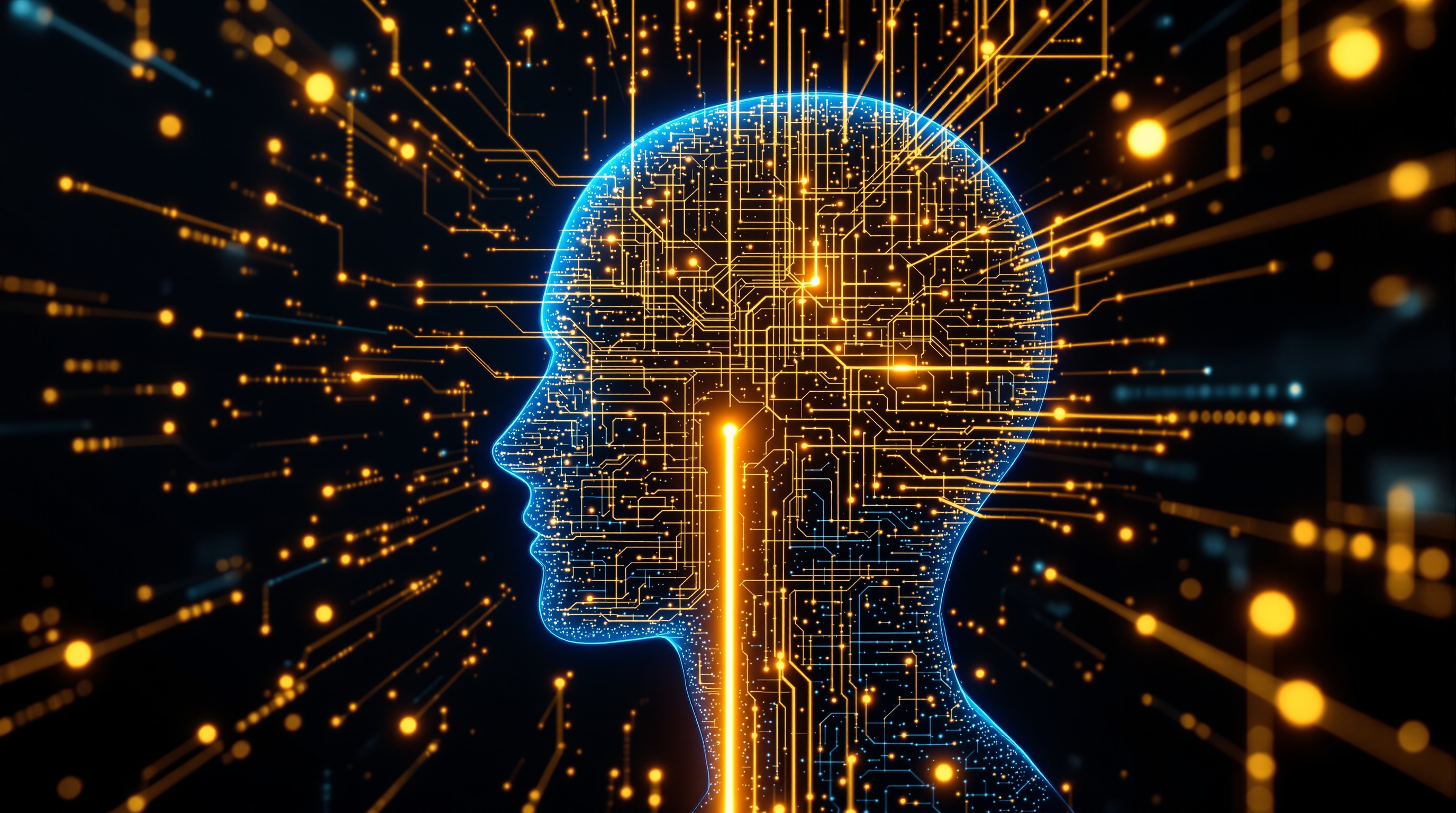
The Human Router Hypothesis
A Theory of Intelligence, Expertise, and Why the Future of AI Isn't Bigger Models
December 2025
The Question That Started Everything
Three years ago, I found myself stuck on a question that wouldn't let go:
Why are humans so good at things they've never seen before?
Not in an abstract philosophical sense. In a very concrete, practical sense. A master chef encounters three ingredients they've never combined and creates a dish. A veteran mechanic hears an engine noise they've never heard and diagnoses the problem. A seasoned entrepreneur walks into a market they've never studied and spots the opportunity.
Meanwhile, our most sophisticated AI systems — trained on billions of examples — stumble when faced with novel combinations. They hallucinate confidently. They miss obvious connections. They lack what we casually call "intuition."
What's going on?
The Models Are Not the Magic
Here's what I've come to believe after three years of thinking about AI, machine learning, and the nature of expertise:
Humans don't have better models. Humans have better routing.
Let me unpack that.
Throughout life, we build specialized mental models. You might have a model for how to write code. Another for how to garden. Another for how to negotiate. Another for how cars work. Another for how people behave when they're lying. These models are trained through experience, education, and practice.
Crucially, these models can be externalized. We write them into books. We encode them in procedures and curricula. Other humans can read those books and "rehydrate" the models in their own minds. That's largely what education is — model transfer.
But here's the thing: having the models isn't what makes someone an expert.
I know plenty of people who've read all the books on negotiation and still can't negotiate. Who understand the theory of cooking and still produce mediocre food. Who can recite startup advice and still make obvious mistakes.
What distinguishes the master from the student isn't the models. It's something else.
What Is Intuition, Computationally?
When we say someone has "intuition" or "experience" or "good judgment," what are we actually describing in computational terms?
I believe we're describing model selection performed exceptionally well under data-poor conditions.
The expert mechanic doesn't have a special "diagnose engine noise" model that novices lack. They have the same underlying models of how engines work, how components fail, how systems interact. What they have that novices don't is the ability to route to the right model instantly, even when the input doesn't clearly map to any training example.
The master chef doesn't have a model for every possible ingredient combination. That's combinatorially impossible. What they have is the ability to select across their models — flavor profiles, textures, cooking techniques, cultural contexts — and blend them appropriately for novel inputs.
Intuition is routing. Expertise is routing well.
The Strange Properties of Human Routing
Once you see intuition as routing, you start noticing some unusual properties.
1. Humans Escape Local Minima
A novice faced with an unfamiliar problem tends to pattern-match on surface features. "This looks like the last problem I saw, so I'll do the same thing." They get stuck.
An expert does something different. They seem to access the structure of the problem, not just its surface similarity to past problems. They find solutions that a greedy search would miss.
In optimization terms: they escape local minima.
2. Humans Satisfice Under Uncertainty
Humans don't find optimal solutions. They find "good enough" solutions quickly. The mechanic doesn't exhaustively test every possible cause. They route to a diagnosis that's probably right and test it.
This isn't a bug. It's a feature. In a world of incomplete information and time constraints, satisficing within acceptable error bounds is the correct strategy.
3. Humans Blend Models Fluidly
Expert routing isn't just "pick model A or model B." It's often "use 60% of model A, 30% of model B, and 10% of something I learned twenty years ago in a completely different domain."
Human intuition performs soft allocation across models, blending them in ways that pure categorization systems can't.
4. Humans Route Well With Minimal Data
This is the killer feature. Humans can route effectively on problems they've never seen — not even similar problems. A few unfamiliar ingredients. A business model in an industry they don't know. A technology they just encountered.
This is precisely where current AI systems fail most dramatically.
What Kind of Computation Is This?
Here's where I went down the rabbit hole.
If human routing were gradient descent — local search, following the steepest path — experts would get stuck as often as novices. They'd overfit to their training data. They wouldn't handle novel combinations.
If human routing were exhaustive search — checking every possibility — it would be too slow. The combinatorics are prohibitive. You can't enumerate every possible model blend for every possible input.
Human routing looks like something else. It has properties that suggest global optimization with structure awareness:
- Finding good solutions without getting trapped locally
- Operating faster than exhaustive search
- Working with sparse data on novel inputs
- Maintaining error bounds (humans make mistakes, but they're usually not catastrophically wrong)
You know what this reminds me of?
Quantum optimization.
The Quantum Annealing Analogy
I want to be careful here. I'm not claiming that human brains are quantum computers. That's a separate debate with its own evidence and controversies.
What I'm claiming is that the computational signature of human intuition resembles quantum optimization more than classical optimization.
Quantum annealing and algorithms like QAOA (Quantum Approximate Optimization Algorithm) have distinctive properties:
- They explore solution landscapes globally, not just locally
- They can tunnel through barriers that trap classical search
- They find approximate solutions within known error bounds
- They work on problems with combinatorial structure
When a chess grandmaster evaluates a position, they're not calculating deeper than a computer. They're selecting which positions to analyze. They prune the search space based on structural understanding. They find strong moves that a purely local search would miss.
That's not minimax search. That's something closer to optimization over the space of possible evaluations.
The 10,000 Hours Reinterpreted
Malcolm Gladwell popularized the idea that expertise requires roughly 10,000 hours of deliberate practice. But 10,000 hours of what, exactly?
Under the Human Router Hypothesis, those hours serve two purposes:
-
Building specialized models: Learning the domain, acquiring the component skills, developing mental representations of how things work.
-
Training the router: Learning when to apply which model, how to blend models for novel situations, what structural features of a problem indicate which approach will work.
The second part is where expertise actually lives.
You can teach someone the models in a few hundred hours of instruction. Medical students learn the textbook knowledge in a few years. But clinical intuition — knowing which of their many models to apply to this specific patient presenting these specific symptoms — takes decades.
The models are compressed knowledge. The router is compressed wisdom.
What This Means for AI
If the Human Router Hypothesis is correct, the current trajectory of AI development has a problem.
The dominant paradigm is: build bigger models trained on more data. GPT-3 to GPT-4 to GPT-5. More parameters, more tokens, more compute.
This approach builds better models. It doesn't build better routers.
When an LLM encounters a novel combination — something outside its training distribution — it has no mechanism for saying "I should apply Model A's approach here, blended with Model B's constraints." It just generates the most likely next token based on a single monolithic model.
That's why LLMs hallucinate confidently on novel inputs. They lack the routing layer that would say: "I don't have a good model for this specific combination. Let me select among my sub-models more carefully."
The Emerging Architecture
Interestingly, the AI industry seems to be converging toward a more human-like architecture — perhaps without fully realizing why.
Mixture of Experts (MoE): Models like Mixtral route inputs to specialized sub-networks. For each token, a gating mechanism decides which "experts" should process it.
Multi-agent systems: Frameworks like AutoGPT and CrewAI compose multiple specialized agents, with orchestration logic deciding which agent handles which subtask.
Tool use: Modern LLMs don't try to do everything with raw generation. They route to external tools — calculators, search engines, code interpreters — based on the task.
Retrieval-Augmented Generation (RAG): Instead of encoding everything in weights, systems route to external knowledge bases and select relevant context.
All of these are routing mechanisms. The industry is building the architectural equivalent of human intuition: specialized models plus selection logic.
But here's the question: How good is the routing?
The Routing Bottleneck
Current AI routing is mostly classical:
- Greedy selection: Pick the expert/tool/model that seems best for this input
- Embedding similarity: Route to the model whose training data is most similar to this query
- Learned classifiers: Train a small model to predict which big model should respond
These approaches share a limitation: they optimize locally. They don't consider the global structure of the selection problem.
As model ecosystems grow more complex — dozens of specialized models, hundreds of tools, multiple constraints on cost and latency and accuracy — the routing problem becomes harder.
In fact, it becomes NP-hard. Optimal assignment of queries to models under multiple constraints is a combinatorial optimization problem.
Current routing systems will increasingly get stuck in local minima. They'll miss non-obvious model blends. They'll fail on novel query types that don't fit clean categories.
The routing bottleneck is the next frontier.
A Research Direction
This brings me to what I've been thinking about for the past year.
If human intuition performs something like quantum optimization for model selection, and if AI systems are increasingly adopting multi-model architectures that require routing, then there's a research program hiding in plain sight:
Apply quantum optimization to the AI routing problem.
Not "quantum inside the neural networks" — that's a different research direction with its own challenges. But quantum optimization for the selection layer. The gating mechanisms. The orchestration logic. The "which model should handle this query" decision.
This is a well-defined optimization problem with structure that quantum approaches might exploit:
- Constraint satisfaction (cost, latency, accuracy targets)
- Combinatorial assignment (queries to models)
- Multi-objective optimization (Pareto frontiers across competing goals)
- Sparse data regimes (novel query types with little routing history)
The hypothesis isn't that quantum will be better for all routing decisions. It's that as model ecosystems scale and constraint complexity grows, classical routing will increasingly get stuck, and quantum-assisted routing will find solutions that greedy approaches miss.
Quantum doesn't make the models better. Quantum makes the selection better.
Why This Matters Beyond AI
The Human Router Hypothesis, if correct, has implications beyond artificial intelligence.
For education: We spend most of our educational effort on building models (teaching content) and very little on training routers (developing judgment). This might be backwards. Maybe we should focus more on case-based reasoning, cross-domain transfer, and selection under uncertainty.
For expertise development: The plateau that many learners hit — where they know the material but can't apply it — might be a routing problem. They have the models but haven't trained the router. This suggests different interventions than "study more."
For organizational design: Companies are essentially routing systems. They have specialized teams (models) and need to decide which team handles which problem. The quality of this routing — who gets which project, which department owns which decision — might be more important than the quality of individual teams.
For understanding consciousness: I'm speculating here, but if routing is central to intelligence, then whatever mechanism performs routing in biological brains might be central to understanding what consciousness actually is. The "executive function" that decides what to pay attention to, which memories to retrieve, which strategies to apply — that might be where the self lives.
What I Don't Know
Let me be honest about the limits of this hypothesis.
I don't know if human routing is actually quantum. The computational signature is suggestive, but brains are warm and wet, and quantum coherence in biological neural tissue is controversial. Maybe the brain achieves quantum-like optimization through some clever classical mechanism we haven't discovered yet.
I don't know if quantum optimization will actually beat classical routing for AI. The hypothesis is plausible, but empirical results are what matter. Maybe clever classical algorithms will scale fine. Maybe the routing problem doesn't have the structure that quantum approaches exploit. We won't know until we try.
I don't know how to train a router directly. Human routers are trained through lifetime experience, including many "routing failures" (mistakes) that provide feedback. How to train an artificial routing system efficiently is an open problem.
I don't know where the line is between "routing" and "thinking." At some level, all cognition might be routing — selecting which neural patterns to activate, which associations to follow, which responses to generate. The hypothesis might be trivially true (everything is selection) or meaningfully specific (there's a distinct routing layer). I'm not sure which.
A Framework for Further Inquiry
Despite these uncertainties, I find the Human Router Hypothesis useful as a framework for asking questions:
- When an expert makes a good decision quickly, what routing are they doing?
- When an AI system fails on a novel input, is it a model failure or a routing failure?
- When we say someone has "good judgment," are we describing routing quality?
- When organizations make bad decisions despite having smart people, is it a routing failure at the organizational level?
- What would it mean to improve routing directly, rather than just building better models?
I don't have all the answers. But after three years of thinking about this, I'm convinced the questions are the right ones.
Conclusion: The Magic Is in the Selection
Here's the short version of three years of thinking:
Human intelligence isn't primarily about having good models. It's about selecting among models with unusual effectiveness, especially when data is sparse and novel combinations appear.
This selection process — what we call intuition, experience, judgment, wisdom — has computational properties that resemble global optimization more than local search.
The AI industry is inadvertently building systems with similar architecture: specialized models plus routing mechanisms. But the routing is still primitive, and it will become a bottleneck as systems scale.
Improving routing — making AI systems better at selecting which models to apply and how to blend them — might be more important than building bigger models.
And if human routing achieves something like quantum optimization in a biological substrate, perhaps we can achieve something similar with artificial systems.
The magic was never in the models. The magic is in the selection.
This essay represents a working hypothesis developed over several years. I share it not as established truth but as a framework I've found useful for thinking about intelligence, expertise, and the future of AI. If it helps you think differently about these questions, it's served its purpose.
Subscribe to the Newsletter
Get notified when I publish new blog posts about game development, AI, entrepreneurship, and technology. No spam, unsubscribe anytime.
Comments
Loading comments...